The story
Balaklava, Crimea1854
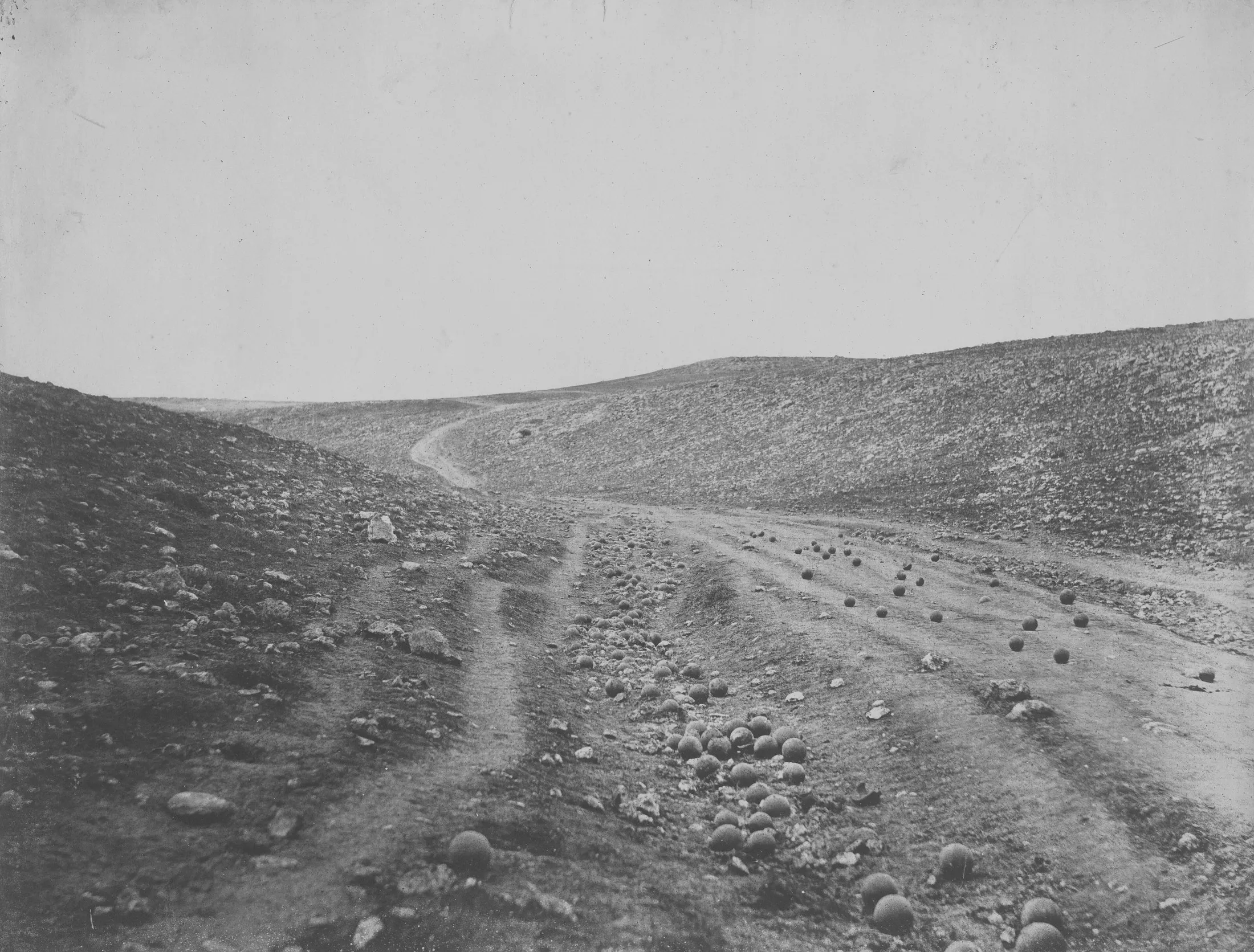
The seventh Earl of Cardigan bought his way up the army, fought duels, and despised his commanding officer, Lord Lucan, who was also his brother-in-law. On 25 October 1854, at Balaklava in the Crimea, a garbled order came down from Lord Raglan, the commander-in-chief, an old man who had lost his right arm at Waterloo and still called the enemy the French. Lucan read it as an order to attack the guns at the far end of the wrong valley, and sent Cardigan’s Light Brigade down it, with Russian batteries on three sides.
Cardigan rode at the front, reached the guns, turned round and rode back, and that evening dined on his yacht in the harbour. About a hundred and ten of his men were dead. Britain decided he was a hero. Tennyson had the poem out within weeks.
Theirs not to reason why, Theirs but to do and die: Into the valley of Death Rode the six hundred.
The knitted, buttoned waistcoat the earl was seen in, and the officers wore against the Crimean cold, took his name. The woollen helmet knitted at home and sent to the troops took the name of the battle, though nobody called it a balaclava until 1881. And the sleeve that runs to the collar instead of stopping at the shoulder, cut for a man with one arm, took Raglan’s.
The gap
The man who led six hundred men into the wrong valley is worn by kindergarten teachers. The word has no memory of the charge at all; it is soft, buttoned and safe, the opposite of him. His commander is a sleeve. The battlefield is a hat.
That is a fairly complete account of how English deals with its disasters. It dresses in them.