The story
London1605
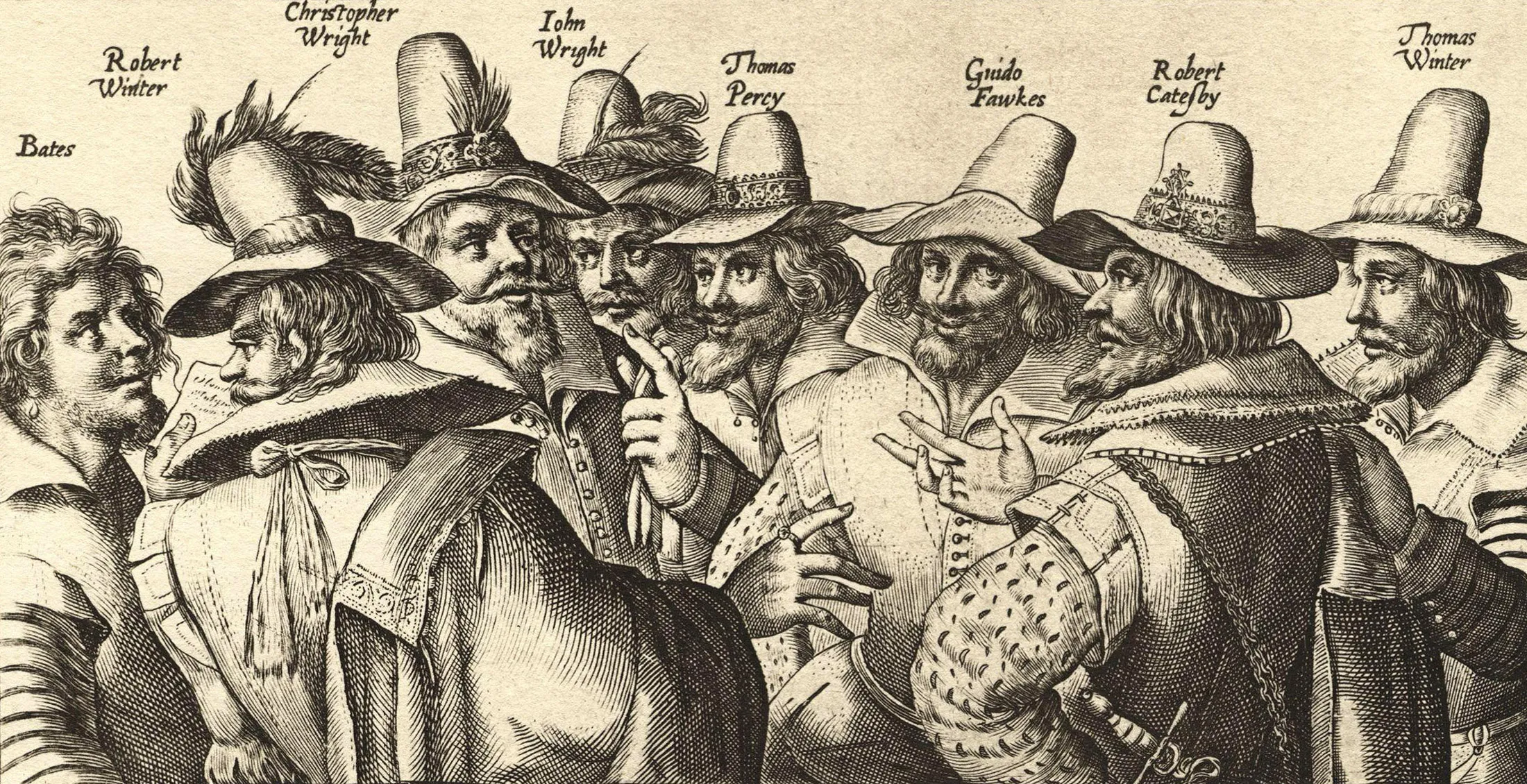
Guy Fawkes was a Catholic from York who had fought for Spain and knew explosives, which is why the plotters gave him the cellar. The plan was to blow up the House of Lords at the state opening of Parliament on 5 November 1605, with the king inside. Fawkes was found there the night before with the powder and a slow match. He was tortured, tried, and on 31 January 1606 taken to be hanged, drawn and quartered. He jumped from the scaffold and broke his neck first.
Parliament ordered the fifth of November kept as a day of thanksgiving, and the country kept it with bonfires. By the eighteenth century children were carrying an effigy through the streets and asking for a penny for the guy before they burned it. In 1806 the word is first recorded meaning the effigy itself. By the 1830s a guy was any person dressed as badly as one, a figure of fun.
Then it crossed the Atlantic, where nobody burned anything on 5 November. Without the bonfire, the ridicule drained out of the word, and by 1847 an American guy was simply a man. By the twentieth century “you guys” meant the people in front of you, and by the end of it that included women, which is the stage the word is at now, and arguing about.
The gap
The most casual word in English commemorates the most serious crime in English history. A man who wanted to kill a king and a parliament became a straw doll, then an insult, then a fellow, then everybody. He was burned every year for two centuries by people who eventually forgot who he was.
And now his face is back. The mask from V for Vendetta is his, worn at protests by people who call each other guys and do not connect the two.