The story
Prague1908
Franz Kafka was a lawyer. For fourteen years he worked at the Workers’ Accident Insurance Institute for the Kingdom of Bohemia in Prague, assessing industrial injury claims and writing reports on the safety of wood-planing machines. He was good at it. He was promoted several times, and when the war came his employers had him declared essential to keep him out of the army.
He wrote at night, published a handful of stories in his lifetime, and died of tuberculosis at forty. His will asked his friend Max Brod to burn everything unpublished, unread. Brod refused. The Trial came out in 1925, The Castle in 1926, Amerika in 1927. By 1936 English had the adjective; the OED’s first citation is the poet C. Day-Lewis.
The word settled on one feeling. A man is arrested for a crime nobody will name, works his way through offices, corridors and hearings that never quite happen, and ends up in a quarry. Nightmare, bureaucracy, guilt without a charge sheet.
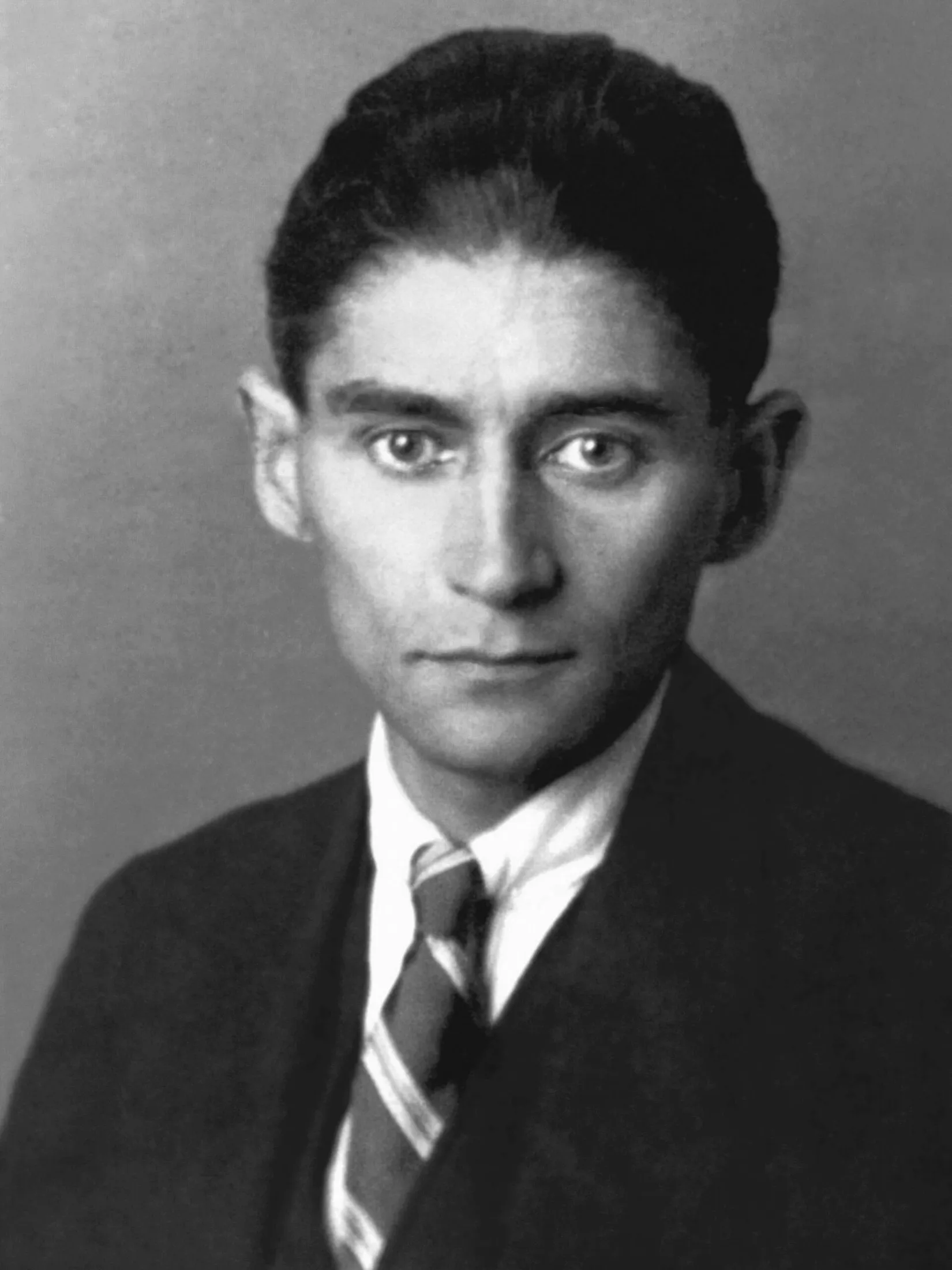
The gap
Kafka was funny.
We friends of his laughed quite immoderately when he first let us hear the first chapter of The Trial. And he himself laughed so much that there were moments when he couldn’t read any further.
Read it again with that in mind: Josef K. is arrested in bed, and his first real grievance is that the guards have eaten his breakfast. The comedy is on the page. The adjective kept the corridors and threw away the laughter.
He was also not the victim of the machine. He was a competent, well-liked part of it. The man who wrote the books about faceless institutions spent his days inside one, writing clear prose about accident prevention. It may be that only someone who understood the paperwork from the inside could make it feel like fate.
And the last turn: the word exists because his instructions were ignored. Had Brod done as he was asked, there would be no Trial, no Castle, and no adjective.