The story
Austin, Minnesota1937
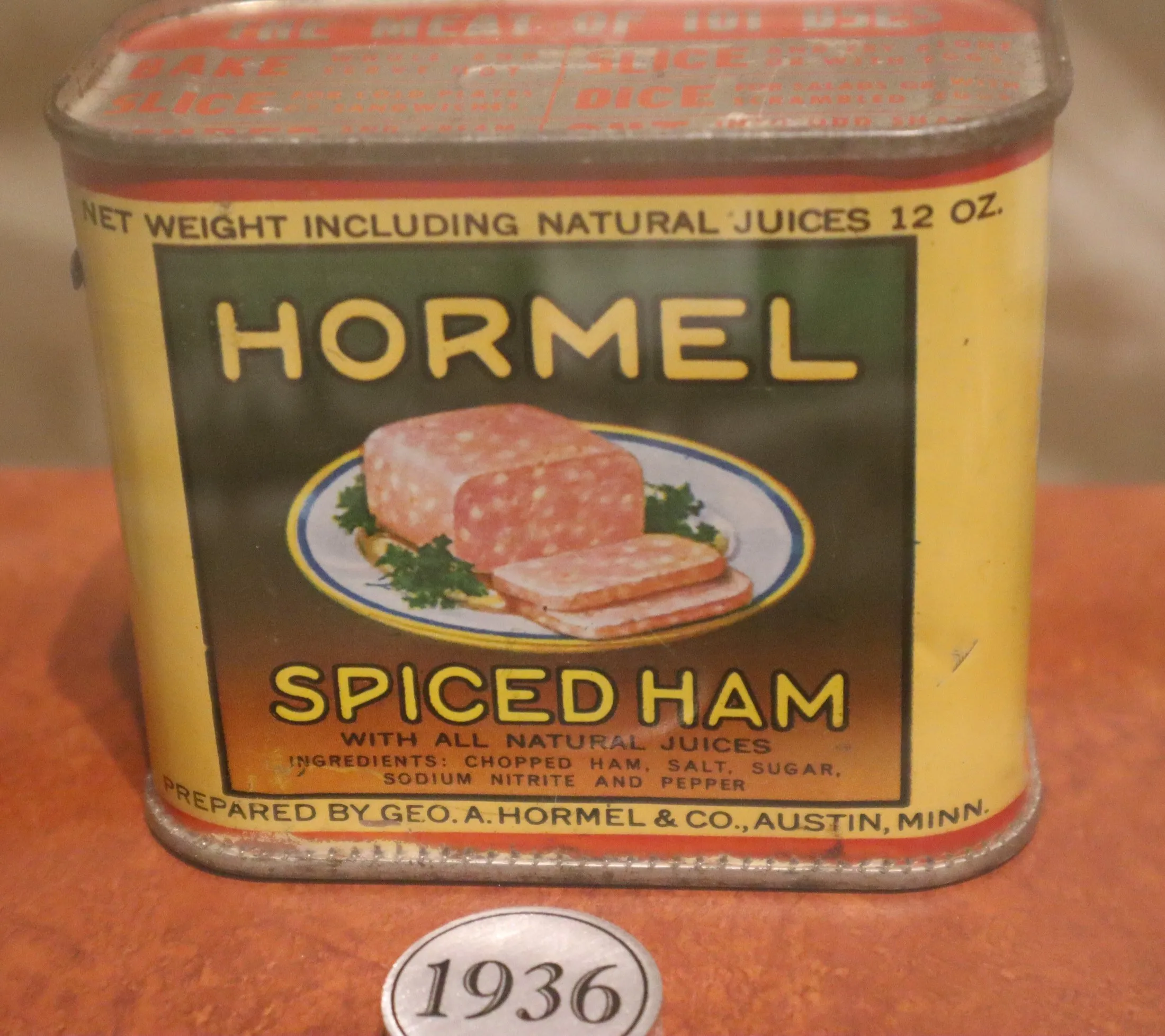
In 1937 the Hormel company of Austin, Minnesota, had a lot of pork shoulder nobody wanted and put it in a tin. The name came from a contest. Ken Daigneau, an actor from New York and the brother of a Hormel executive, suggested Spam and won a hundred dollars. It is usually explained as spiced ham. Hormel says the real meaning is known to a handful of former executives, and has left it there.
The war made it. It kept, it shipped, and it fed soldiers on every front, and civilians in Britain and the Pacific, until they never wanted to see it again. That is the meat the Pythons were thinking of on 15 December 1970, in a sketch set in a café where every dish on the menu comes with spam, and a table of Vikings drowns out the customers by singing the word. It is said a hundred and thirty-two times.
Twenty years later, on the early internet, people who flooded a chat channel or a newsgroup with the same text over and over were said to be spamming it, after the Vikings: noise that crowds everything else out. The first recorded use on Usenet is from 31 March 1993, for a batch of duplicate posts sent by accident. On 12 April 1994 two immigration lawyers in Phoenix, Laurence Canter and Martha Siegel, posted an advertisement headed “Green Card Lottery, Final One?” to five and a half thousand newsgroups at once. The word was fixed within the year. Hormel objected, then gave up, and asks only that the meat keep its capital letter.
The gap
Two accidents, thirty-three years apart. A naming contest, and a comedy sketch about a café, produced the word for the most tedious thing on the internet. The meat is innocent. The company that makes it now spends its time defending a capital S.
And the thing the word describes, repetition that drowns out everything else, is exactly what the Vikings were doing. The sketch was about spam before spam was.